Home / Wrought Iron vs Steel Gates
Wrought Iron vs Steel Gates
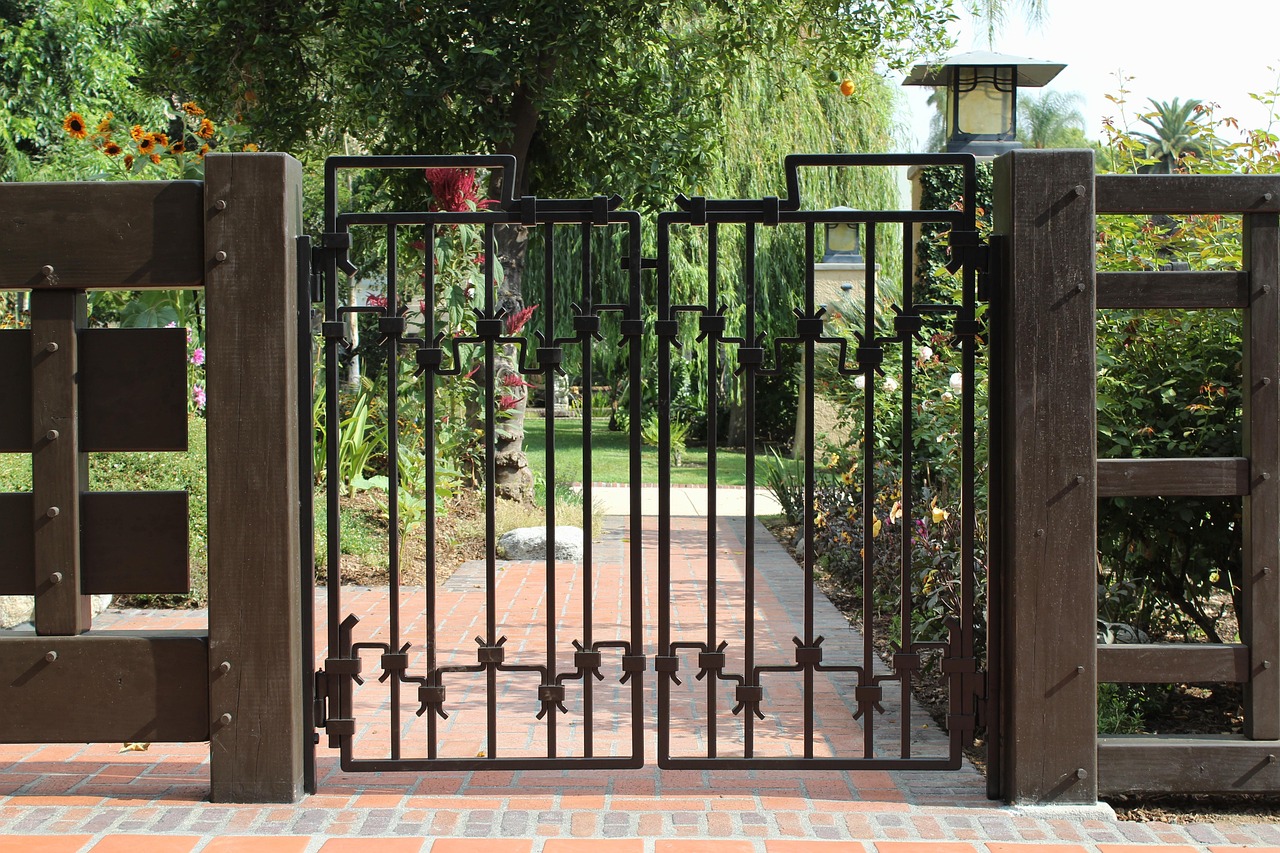
People use wrought iron and steel almost interchangeably when talking about metal gates, and most gates sold today as wrought iron are not wrought iron at all. The two are genuinely different materials with different carbon content, different fabrication methods, and different behavior against the damp salty air of the Gulf Coast. Sorting out which is which, a distinction the [[gate-materials-and-construction]] hub treats as the starting point for any material choice, changes how you judge a gate's strength, how it was built, and how you keep it from rusting on a Pearland driveway.
The defining difference is carbon
Both materials are iron based, and the amount of carbon dissolved in the iron is what separates them. Wrought iron is an iron alloy with a very low carbon content, lower than mild steel. It is made by a process called puddling, in which high carbon cast iron is heated and melted in a hearth and stirred so the excess carbon oxidizes and burns away. As the carbon content drops, the melting point of the iron rises, ultimately higher than the hearth can reach, so wrought iron is never fully molten and many impurities remain worked through it as fibrous slag inclusions. Those fibers give real wrought iron its characteristic grain and its toughness.
Steel is also an alloy of iron and carbon, but with the carbon deliberately controlled. Carbon steel runs from roughly 0.05 up to about 2.1 percent carbon by weight, and even low carbon or mild steel, at around 0.25 percent, contains far more carbon than wrought iron does. That extra carbon is what gives steel its improved mechanical properties: a high yield strength and fracture strength that, combined with a low raw material cost, make steel one of the most commonly manufactured materials in the world. For reference, cast iron sits at the far end with more than two percent carbon, which makes it hard but brittle and unsuitable for a gate frame that must flex under wind and its own weight.
Why almost every modern gate is steel
Genuine wrought iron is barely produced anymore. The puddling process is labor intensive and the material was largely displaced by mass produced steel over the last century. So when a fabricator today advertises a wrought iron gate, they almost always mean a gate made of mild carbon steel worked into the traditional scrolled and picketed wrought iron style. The look is wrought iron, the metal is steel. Knowing this matters, because the care and the strength you should expect follow the actual metal, which is steel, not the historic name on the invoice.
How each is fabricated into a gate
The two materials are worked differently. True wrought iron is shaped by forging, a process that shapes metal using localized compressive force from a hammer or die, often while the metal is heated in a forge. A blacksmith heats a bar and hammers the scrolls and bends by hand, and joints were traditionally forge welded or riveted. That hand forging is why antique wrought iron gates carry slightly irregular, organic curves.
A modern steel gate is built by metal fabrication, the creation of a structure by cutting, bending, and assembling stock. Square steel tube and solid pickets are cut to length, bent cold in jigs, and joined by welding, the fabrication process that fuses metal by melting the joint and letting it cool into a single piece. The workhorse method for gate shops is gas metal arc welding, known as MIG, in which an electric arc forms between a continuously fed consumable wire electrode and the steel, melting both so they fuse, while a shielding gas flows from the gun to protect the molten pool from the air. MIG welding is fast and clean, which is why a custom steel gate can be built to a driveway's exact width in a day.
- Wrought iron: very low carbon, made by puddling, shaped by hand forging, fibrous grain.
- Mild carbon steel: around 0.25 percent carbon, cut and bent from tube, joined by MIG welding.
- Cast iron: over two percent carbon, hard but brittle, used for decorative castings, not gate frames.
Corrosion is the Gulf Coast dividing line
On the Gulf Coast the real test of a gate material is how it fights corrosion, the natural process that converts refined metal back into a more stable oxide. For iron and steel that oxide is rust, a reddish brown iron oxide formed when iron reacts with oxygen in the presence of water or moist air. Pearland's high humidity, the concentration of water vapor in the coastal air, keeps that moisture present most of the year, so both wrought iron and steel will rust if left bare. There is a modest difference between them. The slag fibers and low carbon of genuine wrought iron give it a somewhat slower, more even surface rusting that historically let old ironwork survive outdoors for generations, while mild steel, left unprotected, rusts faster and can pit through a thin section. But since nearly every gate on the market is steel, the practical question is not which metal rusts less, it is how the steel is protected.
The coatings that actually keep a gate alive
Protection is layered onto steel rather than built into it. The base defense is galvanization, applying a protective zinc coating to the steel, most often by hot dip galvanizing where the fabricated gate is submerged in a bath of molten zinc. The zinc guards the steel in two ways: it forms a physical barrier, and because zinc is more reactive than iron it corrodes first, sacrificing itself to protect the steel beneath even where the coating is scratched. Over the galvanizing goes powder coating, a dry powder applied electrostatically and then cured under heat into a thick tough finish more durable than ordinary liquid paint. That powder coat seals the surface against the moisture and gives the color. A gate that is galvanized and then powder coated brings two barriers against the damp Gulf air, which is what a coastal driveway needs regardless of whether the metal is called wrought iron or steel.
The ornamental gates around Autumn Lake are almost all mild steel worked to look like the older forged article, which matters at repair time because the welding and the coating behave nothing like true wrought iron. Telling the two apart on a quote, and budgeting the refinishing each one needs, is covered on pearland metal gates notes.
Choosing for a Pearland gate
For a new gate the choice is effectively made for you: it will be steel, styled to look like wrought iron if you want the classic scrollwork. What matters is judging that steel by its real properties. Confirm the frame is welded from proper steel tube rather than thin hollow sections, ask whether it is hot dip galvanized before powder coating rather than just painted, and treat the coatings as the parts that determine how long the gate lasts against Pearland humidity. A genuine antique wrought iron gate, if you own one, deserves the same coating discipline plus attention to its forged joints, but for the driveway being built today, steel plus galvanizing plus powder coat is the combination that stands up to the coast.